
Engineering the Future of Agricultural Autonomy
Technology development is currently in the research and prototyping phase.
Technology
Systems Approach
Our development integrates mechanical systems, electrified actuation, control architecture, and intelligent software into unified robotic platforms designed for field deployment.
Modular Engineering Philosophy
We adopt a platform-oriented design philosophy, building foundational robotic systems capable of supporting multiple mechanical tools and evolving workflows.
Electrification & Sustainability
Our systems are designed around electrified architectures to reduce operational dependency on fossil fuels and enable compatibility with decentralized energy ecosystems.
Intelligent Control & Autonomy Pathway
We are developing control systems that enable structured progression from guided operation toward repeatable, assisted field workflows, with autonomy introduced incrementally through validation.
We are building a modular agricultural robotics platform designed to support structured, repeatable field operations. Development progresses incrementally through mechanical validation, electrical integration, controlled field testing, and progressive autonomy, ensuring reliability before scale.
Validation-Driven Development
Every subsytem is validated against clearly defined field tasks before integration. Development is structured around mechanical robustness, power architecture integrity, control reliability, and deployment feasibility, advancing only when measurable performance benchmarks are achieved.
Plantation Soil Operations
Our Initial development focus is on repetitive soil operations within coconut plantation environments. These tasks demand geometric consistency, sustained torque delivery, terrain adaptability, and high repeatability making them an ideal foundation for structured robotic validation.
Future Application Areas
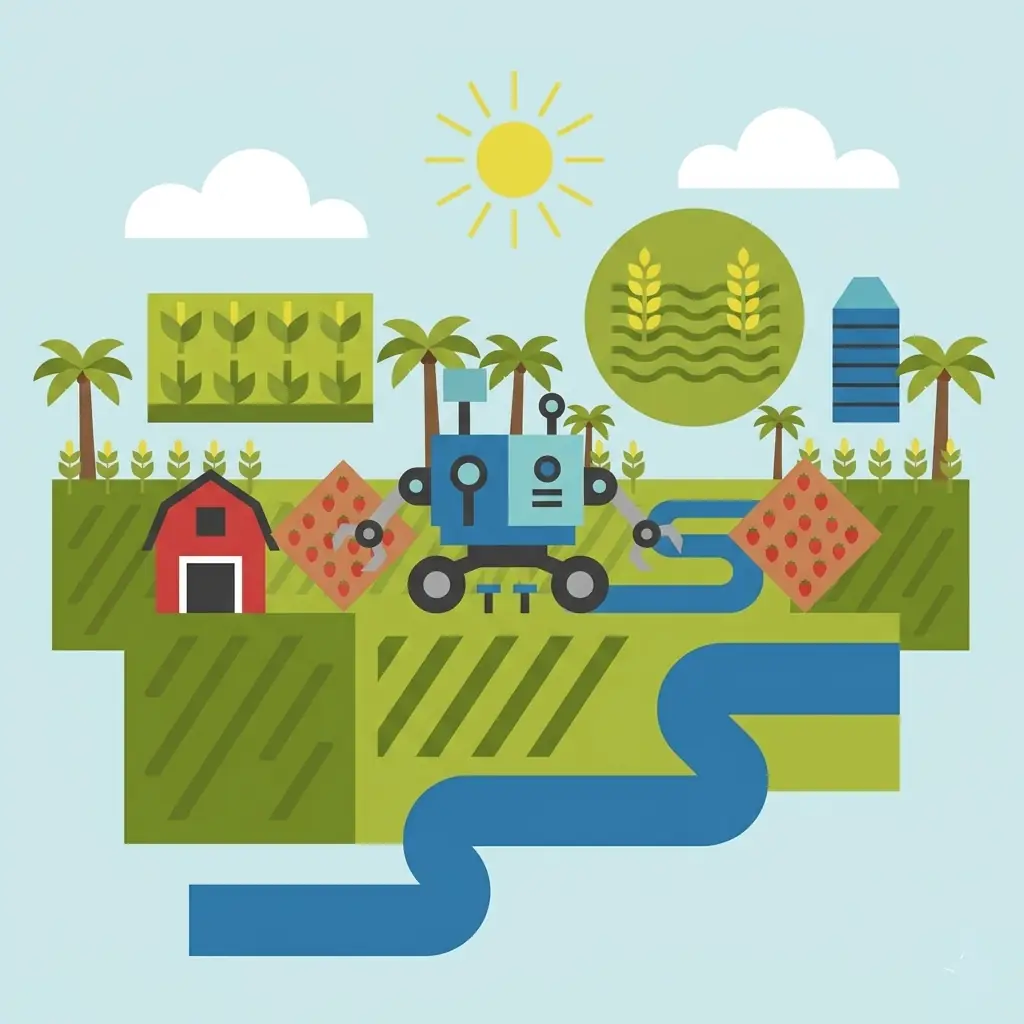
As development progresses, the platform is being designed to support a broader range of agricultural operations.
Precison tilling and soil structuring to ensure consistent basin formation and root-zone conditioning.
weeding
Controlled mechanical operations for vegetation management between plantation rows.
Metered and localized delivery of nutrients and water at the plant level.
Platform-assisted material handling and repetitive support tasks during harvest cycles.
Interchangeable tools modules enabling task-specific operations across plantation environments.